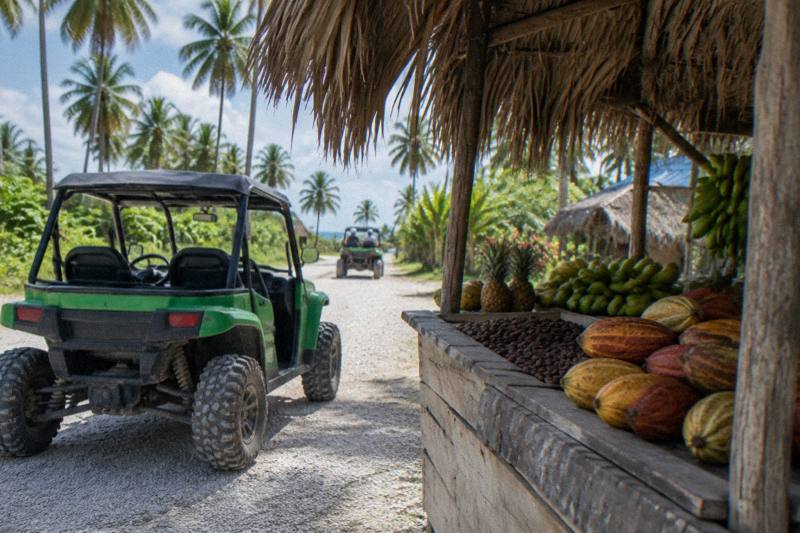
Can You Bring A Phone Or Camera On A Buggy Tour In Punta Cana?
Yes, you can bring a phone or camera on a Punta Cana buggy tour. Here is how riders protect gear from dust, mud and water, and what the listings say about photo packages.
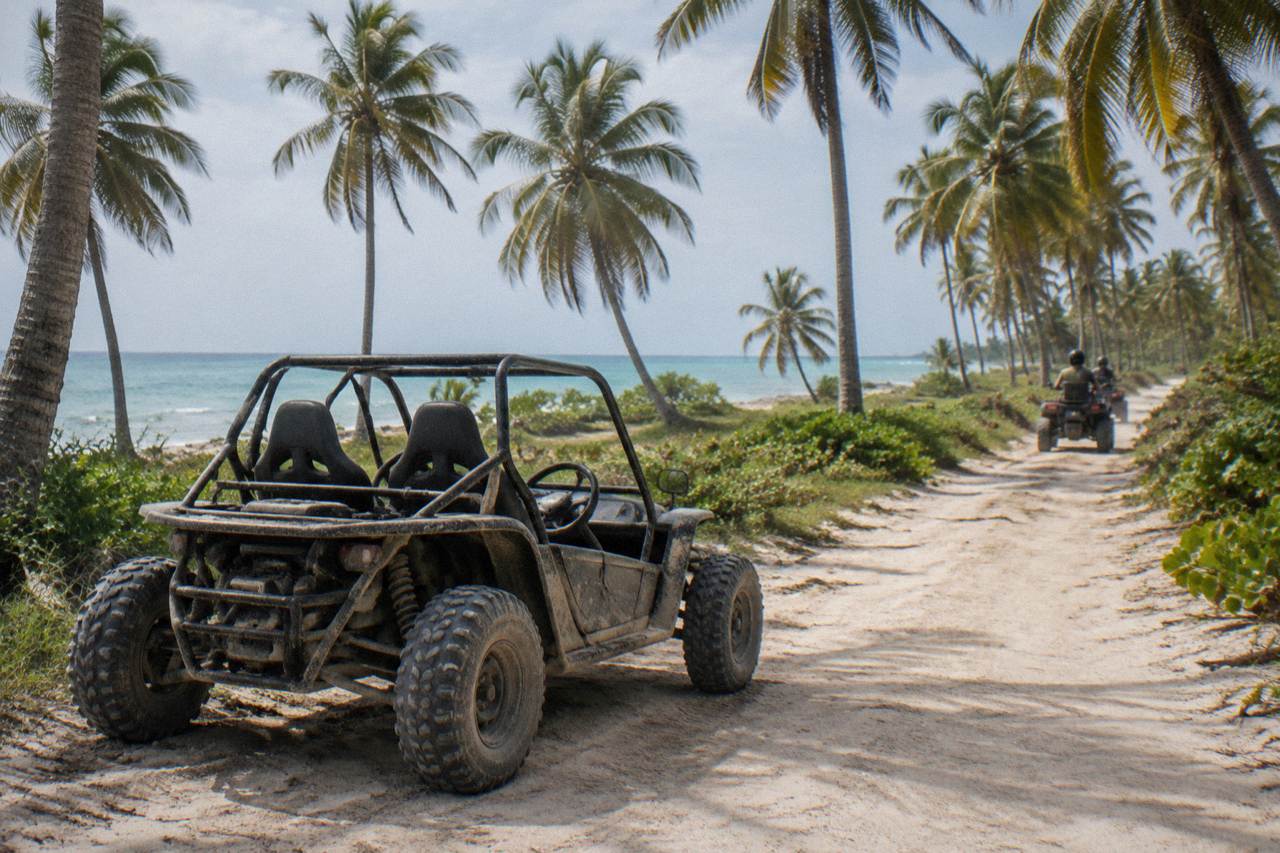
Almost every rider brings one, and none of the tours listed here bans personal cameras or phones. Operators instead sell their own photo packages and list photos under exclusions, which is a hint that your own device is expected, not forbidden. The practical problem is not permission, it is protection: dust, mud, spray at the cenote and bumpy trails kill more phones than any rule ever will.
The Punta Cana Buggy Tour run by Macao Off-Road Experience, from $35 per person and rated 4.2 from 3,273 reviews, lists bandanas and gratuities as its exclusions, not cameras. The ATV Adventure to Water Cave and Macao Beach, from $45 per person and rated 4.8 from 3,498 reviews, lists professional photos as optional and available for purchase, a phrase that only makes sense if riders are also free to shoot their own. The same pattern repeats across the buggy category: "professional pictures available for purchase" on one listing, "photos available to purchase" on another, and no line anywhere that says leave the phone at the hotel.
What riders actually do, according to guest reviews on the live listings, is bring the phone in a zipped pocket or a small dry bag and shoot at the stops rather than on the move. That is the sensible split. The stretches between stops are where the dust lives, and Macao Beach, the cenote and the ranch tasting are where the pictures are.
Three more listings show the range a camera-carrying rider faces. The Flintstones buggy is a 4.7 from 124 reviews with photos sold separately. The 4x4 ATV Experience with Water Cave, Chocolate and Coffee Tasting, from $56.93 per person and rated 4.8 from 1,444 reviews, runs the classic cave-and-beach route. The buggy and jungle ATV tour from Macao OffRoad Experience, from $30 per person and rated 4.8 from 24 reviews, adds a 15-minute horseback ride to the same Macao Beach area. All three welcome your own camera; none of them promises to keep it clean.
How Do You Keep A Phone Alive In Dust And Mud?
Keep your phone in a zip-seal bag or a waterproof pouch with a lanyard, which handles most of the risk, and stash it in a deep zippered pocket the rest of the time. Operators describe Macao's trails as dirt tracks, mud, and off-road paths, and muddy conditions after rain are common, so never shoot handheld while driving: a phone dropped on a bumpy trail is usually gone for good.
Dust is the quieter enemy. This is why bandanas appear as an exclusion on listing after listing: riders are expected to arrive with something covering their face, and the same fine limestone dust that coats a bandana works its way into phone speakers and camera lenses. A lens that opens and closes mechanically, like the zoom on a compact camera, is the most vulnerable piece of consumer gear on a buggy. A phone with a fixed lens, or an action camera in its own housing, fares much better.
The pocket question matters more than people expect. Loose shorts pockets eject phones on the first whoop section. A chest strap or cross-body bag worn under a light jacket keeps the weight stable, and a lanyard around the neck means that even if a pocket fails, the phone swings rather than vanishes. Riders who review these tours frequently mention the cenote swim, where the listing for the Buggy or ATV Tour with Cenote & Beach Stops, from $24 per person and rated 4.7 from 647 reviews, names Cueva La Posa as an actual stop. A phone that is merely water resistant, rather than sealed in a pouch, is a coin flip at a stop like that.
A simple rule keeps it manageable: camera out at the stops, camera away between them. The ranch tasting stops, the beach, and the cave are stationary minutes with real light and real subjects. The trail minutes are brown. You lose almost nothing by pocketing the phone for the drive, and you keep the phone.
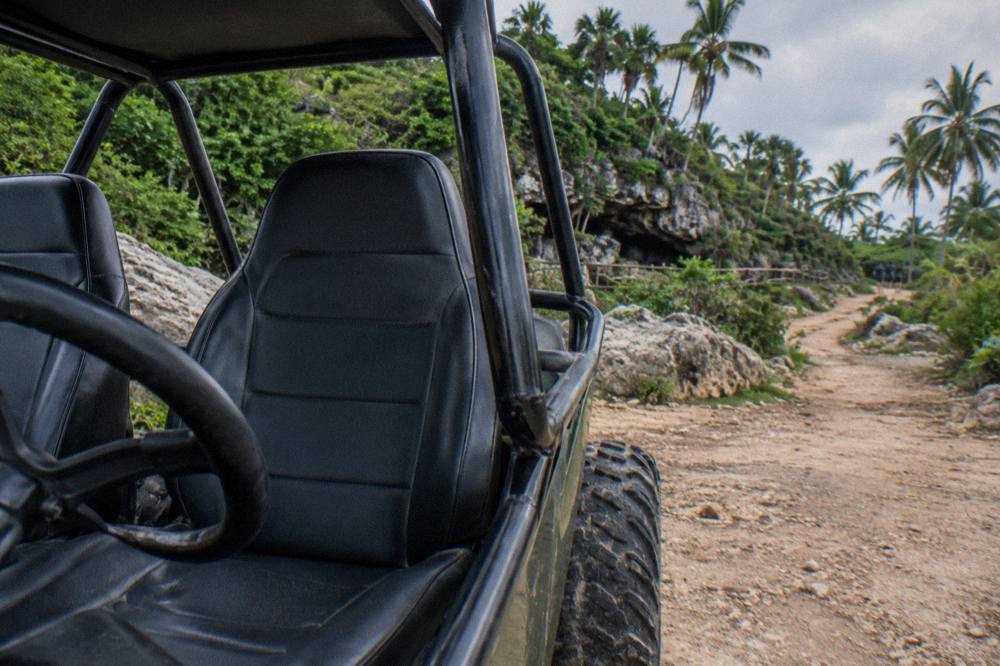
For a fuller gear rundown beyond the camera, the what to wear guide covers shoes, bandanas and clothing, including the closed-toe shoe rules several operators state. The dust advice there and the camera advice here are the same advice: cover the openings.
Should You Buy The Operator Photo Package Instead?
Yes, on many buggy and ATV tours, because professional photos are sold separately on a long list of rides, from the ATV Adventure's optional purchase photos to the Flintstones listing's photos exclusion, and shooting while driving is genuinely hard while the operator's photographer rides positions you cannot reach. Your own camera covers the stops; the package covers the action, so decide before the tour, because buying on the spot usually means cash and hesitation.
The pattern is consistent enough to generalize. Where a listing names photos as an exclusion, a paid package is normally offered on the day. Where a listing lists a professional photographer as an inclusion, like the Punta Cana Family Wild Buggy Eco Adventure, from $48.95 per person and rated 4.7 from 2,445 reviews, the shooting happens but the pictures still cost extra afterward; its exclusions include "professional pictures available for purchase". Reading the inclusions and exclusions on the live listing before you book tells you exactly which situation you are walking into.
Pricing between the two approaches is not really comparable. A package price is set on the day by each operator and is not printed in these listings, so treat it as a decision you make on site. What you can compare is what your own gear costs you: nothing beyond a pouch you probably already own. Riders who want both often let the operator shoot the driving sequences and keep their own phone strictly for the beach and cave, where the operator's photographer is busy with the group anyway.
The 4x4 ATV Experience with Water Cave, Chocolate and Coffee Tasting is a good example of where this split pays off: its water cave and tasting stops give you slow, stationary photo minutes, while the riding sections in between are where you should have both hands on the bars.
One more practical note: bring the phone partly charged and with storage cleared. Operators describe tours as running roughly 4 hours listed plus transfers that can start 60 to 90 minutes before departure, and video eats space fast at a beach stop with waves in frame.
What Do Listings Actually Say About Photos And Equipment?
Every photo-related claim in the table below comes straight from the listings' inclusion and exclusion lines. The short version: included photography is rare, paid packages are standard, and personal gear is never mentioned as a problem. Where a listing is silent, treat silence as permission with ordinary care, and confirm anything unusual with the operator through the live listing before booking.
| Tour (listing name) | Price basis | Rating | Photo situation on the listing |
|---|---|---|---|
| Punta Cana Buggy Tour: ATV, Cave Swim & Macao Beach + Pickup | From $35 per person | 4.2 from 3,273 reviews | Exclusions: bandanas, gratuities; no photo ban |
| Punta cana: Flintstones Buggy, Cave and Adventure in Bavaro | From $130 per group | 4.7 from 124 reviews | Photos listed as an exclusion, sold on the day |
| Punta Cana Family Wild Buggy Eco Adventure | From $48.95 per person | 4.7 from 2,445 reviews | Photographer included, pictures sold separately |
| ATV Adventure to Water Cave and Macao Beach | From $45 per person | 4.8 from 3,498 reviews | Professional photos optional, purchase on site |
| Wild Off-Road Dune Buggy Adventure | From $39 per person | Few reviews yet | Professional photos listed as an exclusion |
| Buggy Half Day Adventure with Cave Swim | From $45 per person | 3.6 from 22 reviews | Photos not named either way in the listed lines |
Two rows deserve comment. The Family Wild Buggy Eco Adventure is one of the few listings that names a professional photographer in its inclusions, which makes it a strong pick for riders whose own camera is weak. And the Wild Off-Road listing shows the other end: judge it on its stated inclusions, which include a 40-minute swim at Macao Beach, a cenote swim, and coffee, chocolate and mamajuana tasting.
Notice what is absent everywhere: a line telling you not to bring a camera. Operators sell photo packages precisely because they expect you to arrive with a phone in your pocket and want the action shots you cannot take yourself. If you are still weighing which tour style suits you, the how to choose guide breaks the decision down by vehicle, duration and budget.
What About Action Cams, Mounts And Selfie Sticks?
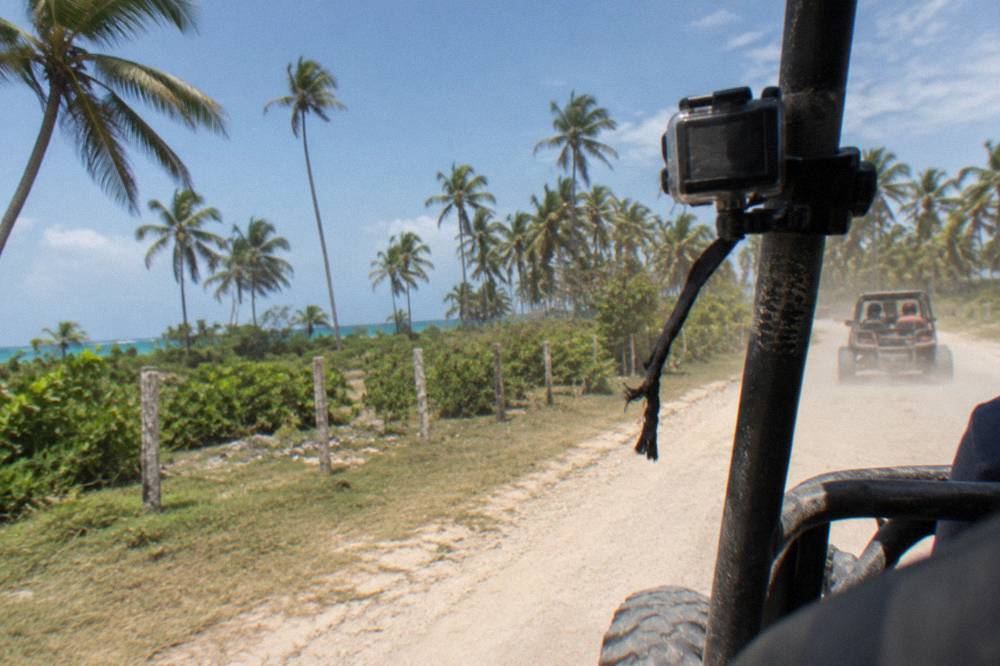
Action cameras in their own housing are the best-suited gear for these tours, and a mount on the vehicle beats a mount on your body for driving shots. Handheld selfie sticks are the worst option on these routes: they extend your camera into dust, branches and the space where another buggy passes. Whatever you mount, check it after the first ten minutes of trail, because vibration loosens cheap mounts faster than any crash does.
The housing matters more than the brand. A sealed case shrugs off the mud spray that 2026 operator pages describe as routine on these routes, and a floatable housing survives the one-drop moment at the cenote. Chest mounts work but put the lens at dust level; a vehicle mount on the roll bar or hood area keeps the camera high, stable and out of the worst spray, and frames both riders in shot.
Two facts about these tours shape the mounting decision. First, group sizes run large on several listings, and convoys mean dust from the buggy ahead, so a rearward-facing mount gets a lens full of it within minutes. Face the camera forward. Second, the tours that include a beach stop with real waves, like the buggy and jungle ATV tour from Macao OffRoad Experience with its Macao Beach and cenote stops plus 15 minutes of horseback riding, reward a camera you can unclip in one motion, because the best frames at the beach are handheld ones anyway.
That buggy and jungle ATV tour is worth a look for camera-heavy riders for one more reason: at 4.8 from 24 reviews and from $30 per person, it is one of the lower-priced ways to run the full cave-and-beach circuit with hotel transport listed as included, leaving budget for the accessories.
A spare battery or power bank rounds it out. Four hours of riding plus transfers, with the screen bright under Caribbean sun, drains a phone faster than most riders expect, and the operator's photographer is not a charging service.
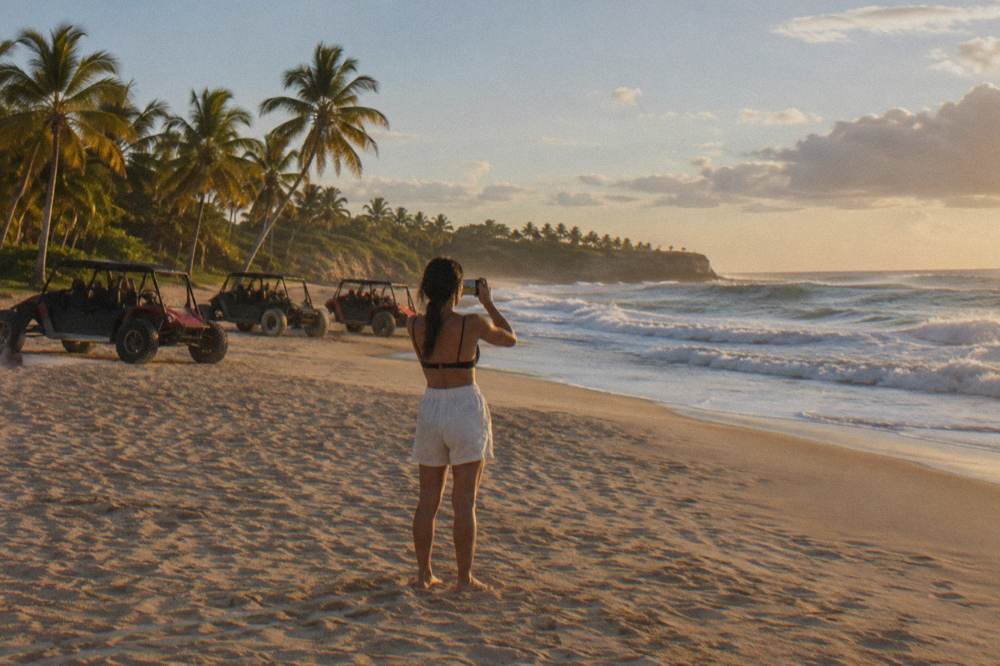
Will Rain Or Water Ruin Your Camera Gear?
Rain is a real possibility any month of the year in Punta Cana, and the climate record shows even the driest months average 53 to 73 mm of rain, while October averages around 142 mm. Operators state tours generally run rain or shine, with cancellation reserved for severe weather, and several listings say muddy trails after rain are expected and part of the ride. For your gear, that means a dry bag, not optimism.
The monthly picture comes from long-term averages: the December-through-April stretch is the drier window, with February and March averaging 53 to 55 mm, while the late-year months climb, October to 142 mm and November to 119 mm on the same table. None of that predicts your Tuesday. A passing shower on a buggy route is over in minutes and leaves the best light of the day behind it, which is why riders who bagged the camera during the rain get the shots after it.
| Month | Avg. rainfall | Avg. rainy days | What it means for your camera |
|---|---|---|---|
| February | 55 mm | 12 | Driest window, still carry a pouch |
| March | 53 mm | 12 | Lowest average, dust beats water as the risk |
| June | 112 mm | 14 | Afternoon showers common, dry bag advised |
| September | 109 mm | 15 | Humid and wet, seal everything |
| October | 142 mm | 16 | Wettest average month, full dry bag routine |
| November | 119 mm | 16 | Still wet, conditions ease toward December |
Water at the stops deserves the same respect as rain. The cenote swims named on these listings are freshwater caves, and the Macao Beach stop sits on an open-Atlantic shore where surf is part of the beach's character; Playa Macao is known for surfing, which tells you the water moves. A phone rated for splashes is not a phone rated for waves. The hurricane-season context, June 1 to November 30 per the NOAA National Hurricane Center, matters less for a camera than for a booking, since free cancellation is listed across these tours and severe weather is the stated trigger for actual cancellation. The rain-vs-mud question for the ride itself is covered in detail in buggy tours in the rain and mud.
One habit ties rain and dust together: the bag comes out at every stop, not just the wet ones. Limestone dust after a dry stretch is as abrasive inside a lens mechanism as any water, and the pouch costs nothing to re-seal.
Where Does This Leave Your Packing List?
Bring the phone, bring a sealed pouch with a lanyard, and bring the action camera if you own one, mounted forward on the vehicle rather than on your chest. Skip the selfie stick on the trail, decide on the operator's photo package when you see what it costs on the day, and clear your storage the night before. That combination costs almost nothing and covers every photo situation a Punta Cana buggy route actually produces.
The deeper point from the tours listed here is that operators have already voted on this question with their exclusion lists. Thirty-one listings, and not one bans a personal camera; a dozen or more sell photos instead. The ecosystem assumes your phone rides along and prices the action shots you cannot take. Your job is only to make sure the phone survives to the end of the day, and the gear that does that fits in one pocket.
If you are pairing this with the broader excursion decision, the pieces connect: this site's ATV Punta Cana coverage includes the tour picker and the age-limit, licence and pickup guides that answer the other booking-stage questions in one place. The camera question is the easiest of them, because the answer is yes, and the preparation is a $5 pouch.
Whichever of the three you lean toward, the same camera rules apply: pouch on the trail, phone out at the beach, package decision made calmly rather than mid-dust. Check availability on the live listing for current times, inclusions and the free-cancellation terms that run across these tours, and pack the night before instead of the morning of.
Common Questions About Phones And Cameras On Buggy Tours
Can You Bring A Phone Or Camera On A Buggy Tour In Punta Cana?
Yes. No listing among the 31 tours listed here bans personal phones or cameras. Operators expect them and sell professional photo packages separately, which appear in many listings' exclusion lines. Protect the device from dust, mud and water rather than asking permission for it.
Do Buggy Tours Include Photos?
Usually not for free. Most listings list professional photos as an exclusion or as an optional purchase on the day. One listing, the Family Wild Buggy Eco Adventure, includes a professional photographer in the tour but still sells the pictures afterward. Check the listing's inclusions and exclusions before booking.
Is A Phone Enough, Or Should I Bring A Real Camera?
A modern phone covers the beach, ranch and cave stops well. For photos while actually driving, an action camera in a sealed housing is far better suited than either a phone or a compact camera, because of dust and vibration. A zoom-lens compact is the most vulnerable option on these trails.
Will My Phone Get Wet On The Tour?
Very likely it will meet water, whether from rain, splash at a cenote stop like Cueva La Posa, or surf at Macao Beach. A sealed waterproof pouch with a lanyard, rather than a bare water-resistant phone, is the standard recommendation for these routes.
Can I Use A Selfie Stick While Driving?
Nothing in these listings bans one, but it is a poor idea on convoy trails with dust, branches and other buggies close by. Riders report better results mounting an action camera forward on the vehicle and keeping handheld shooting for the stops, where the light and the subjects actually are.
What Happens To Tours When It Rains?
Operators state tours generally run rain or shine, with cancellation reserved for severe weather, and several listings describe muddy trails after rain as a normal part of the ride. Free cancellation is listed across these tours, so check the specific listing's terms if the forecast looks rough.