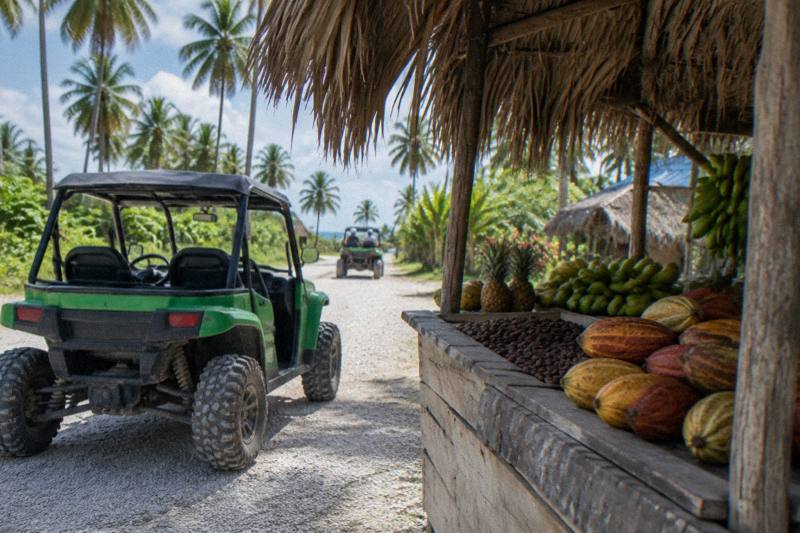
What To Stay Away From In Punta Cana?
Practical things to avoid on a Punta Cana trip: beach access traps, money mistakes, health risks, booking errors and hurricane season missteps, with the buggy and quad tours that fit around them.

The answer: avoid unvetted beach access routes, unpriced taxi rides, paying in dollars where pesos are cheaper, drinking tap water, booking tours without reading pickup and age terms, and assuming hurricane season does not matter. None of these are reasons to skip the trip, they are just things worth handling in advance so the week runs smoothly.
Punta Cana is a resort town built around one long stretch of coastline, and most of what goes wrong for visitors happens in the narrow band between the hotel gate and the sand. The Dominican Republic keeps its beaches public by law, with a 60-meter maritime-terrestrial strip from the high tide line that resorts cannot legally block. In practice, reaching that strip can involve access points, vouchers or parking arrangements that surprise people who expected to walk straight on from anywhere. Knowing which access routes are simple and which carry strings attached removes most of the friction.
The same applies to money. ATMs in the area charge a machine fee of roughly 4 to 7 US dollars per withdrawal on top of what your own bank adds, restaurant bills are typically a few percent cheaper when paid in Dominican pesos rather than dollars, and taxis have no meters at all. Then there is timing: the Atlantic hurricane season runs from 1 June to 30 November according to the NOAA National Hurricane Center, and the rainiest months on long-term averages are October and May. A buggy or quad day still works around all of this, and picking the right one from ATV Punta Cana keeps the fun parts of the trip front and center.
Which Beach Access Traps Catch Visitors Out?
The main trap is assuming every beach is equally easy to reach. Bavaro Beach has exactly four public access points along roughly 12 miles of sand, and non-guests entering Juanillo Beach through the Cap Cana main gate must pay a food and beverage voucher, with ID held at security. Macao Beach, by contrast, has zero entry fee and is fully public.
The four named access points for Bavaro Beach are Corales, El Cortecito, Jellyfish and Bibijagua, with Bibijagua doubling as the handy parking and access spot next to the local flea market. A resort entrance is not a public access point: the shoreline is public, but the route through the property is not.
Macao Beach is the standout for simplicity. It sits at the northern end of the region in the Veron Punta Cana district, carries no entry fee. It is also the beach that most buggy and ATV tours use as their scenic stop, which is worth remembering if you are planning both a beach day and an off-road day. Our Macao Beach guide covers the access details, and the Macao Beach buggy and quad tours page lists the tours that finish there.
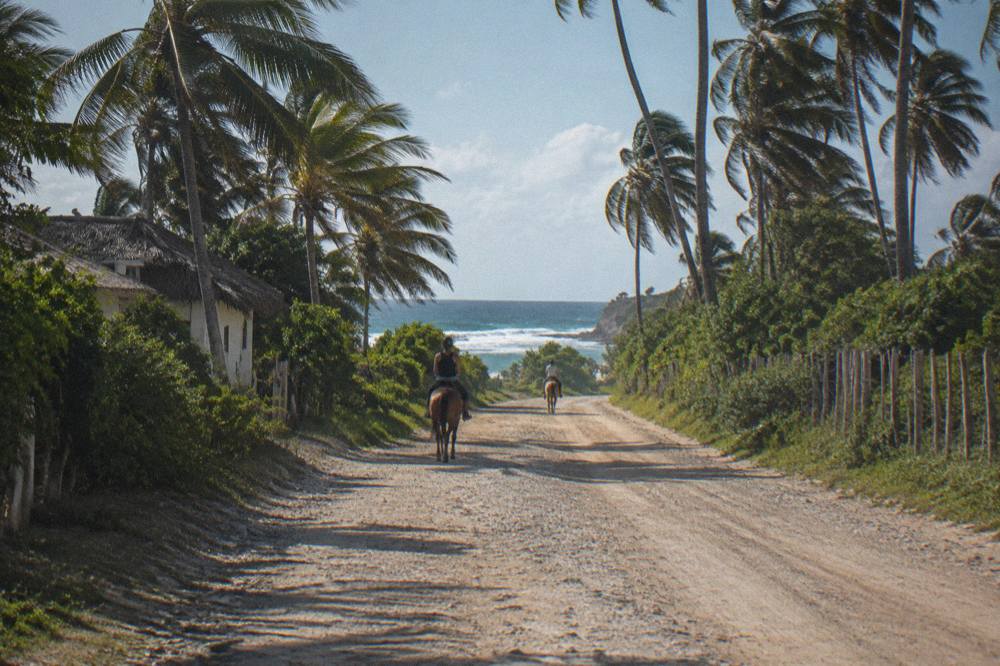
For day-trippers driving themselves, the dedicated public parking near Macao is described as free, with a tip to the attendant commonly expected. Do not count on resort parking unless you are a guest of that resort. And treat any claim about toilets, showers or shade rentals being available as unconfirmed: a beach directory reviewing the area's public works could not verify those facilities are operational, so plan for a beach without services rather than being caught out.
Where Do Tourists Lose Money In Punta Cana?
The four common leaks are repeated small ATM withdrawals, paying tourist services in dollars where pesos price lower, unmetered taxi rides without an agreed fare, and buying tour extras at inflated prices on the day. A single large withdrawal, peso notes for local spending, and a pre-agreed or pre-booked fare close most of them.
Start with the ATM math. Machines in Punta Cana add a fee of roughly 4 to 7 dollars per transaction, and withdrawal limits typically run from 10,000 to 20,000 Dominican pesos. Four small withdrawals instead of one large one can quietly cost 12 to 21 dollars more in machine fees alone, before your home bank adds its own charge. Supermarkets list prices in pesos only, and inexpensive restaurant meals run to roughly 500 pesos, with mid-range three-course dinners for two around 2,500 pesos, so peso cash genuinely gets used.
Taxis are the second leak. There are no meters, so the price is whatever is agreed before the ride. Agree first or pre-book, every time.
| Common cost | Typical figure | How to avoid overpaying |
|---|---|---|
| ATM machine fee | Roughly 4 to 7 USD per withdrawal | One large withdrawal instead of several |
| Restaurant payment | A few percent cheaper in pesos | Pay local bills in DOP, keep small notes |
| Juanillo Beach entry via Cap Cana gate | Food and beverage voucher | Use the free public beaches instead |
The third leak is tour extras bought on the spot. On buggy and ATV tours, professional photos are almost always an optional purchase, and several listings name bandanas, goggles and towels as items to bring or buy rather than included items. Check what the listing includes before you go: the Punta Cana Buggy or ATV Tour with Macao Beach, Cave and Tastings lists round-trip transport, a full tasting lineup and guides in its price from $29 per person, while the half-day ATV Adventure to Water Cave and Macao Beach, from $45 per person, lists photos as an optional extra. Reading the inclusions line on the tour picker saves the surprise spending.
What Health And Sun Risks Should You Manage?
The manageable risks are mosquito-borne dengue, dehydration and sun exposure, and drinking tap water. The Dominican health ministry tracks dengue cases nationally and urges standing-water prevention; standard travel advice is bottled water, repellent and serious sun protection, none of which the resorts hand you automatically.
Dengue is present in the Dominican Republic, with confirmed cases recorded through 2026 and the DENV-2 serotype circulating. The Ministry of Public Health's prevention guidance is concrete: cover tanks and cisterns, empty and scrub containers weekly, and remove standing water from tires and bottles. For a visitor, that translates to repellent in the early morning and evening, long sleeves at dusk if you are outdoors, and closed windows or screens at night. The ministry also advises avoiding aspirin and ibuprofen if dengue symptoms appear, and seeking medical care promptly.
Tap water is the other recurring issue. Standard advice for the Dominican Republic is that tap water is not recommended for drinking; use bottled or filtered water, including for brushing teeth if your stomach is sensitive.
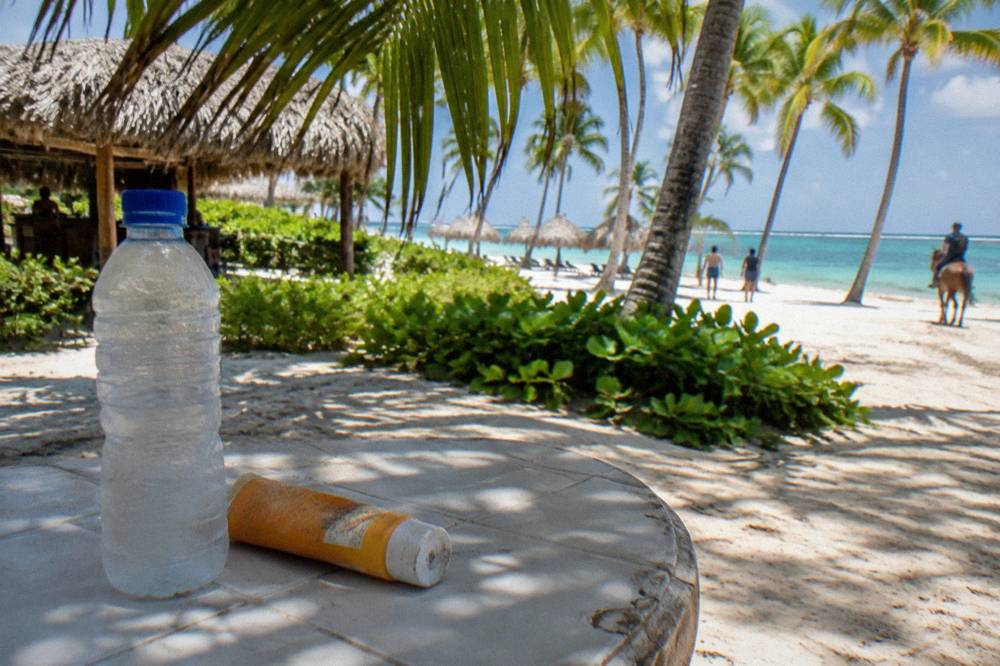
The sun is stronger than most visitors expect at 18 degrees north, with long-term average daily highs between 28 and 32 degrees Celsius every month of the year and sea temperatures that never drop below 26. There is no cool season to be lax about. Reapply sunscreen, drink more water than feels necessary, and plan the middle of the day under shade rather than on the sand. For deeper timing questions, our Punta Cana weather by month page carries the full climate table.
Mosquito care matters doubly on off-road days. Buggy and ATV tours spend hours on ranch land and jungle trails where standing water is part of the scenery, and repellent is your job. The Family Wild Buggy Eco Adventure, 4.7 from 2,445 reviews and from $48.95 per person, is a good example: it lists round-trip transport, coffee and chocolate tasting and a Macao Beach stop, but nothing about insect protection, so pack your own.
Which Tour Booking Mistakes Should You Avoid?
The mistakes that cost people tours are ignoring pickup zone rules, skipping the driver age and licence terms, assuming every listing includes the same things, and booking the cheapest option without checking its review pool. Pickup terms, age minimums and inclusions genuinely differ tour to tour.
Pickup is the biggest one. Cap Cana and airport-area guests are directed to a meeting point near Blue Mall Punta Cana on several listings rather than door pickup, Airbnb guests within a given radius may be sent to a shopping-center meeting point, and at least one operator charges a per-person surcharge for Cap Cana hotels. The typical pickup window opens one to one and a half hours before tour start, with the exact time emailed after booking. Guests who miss the pickup email are the ones waving at an empty lobby.
Driver rules vary more than people assume. On most listings here, drivers must be 18 or older, and several require a valid licence from your home country, but at least one listing allows 16-year-olds with a learner's permit or a staff driving assessment, and one operator states no licence is required at all. There is no single national rule to memorize; the only reliable move is to read your specific listing and its confirmation. Our buggy and quad age limits and driving licence for buggy tours pages collect the detail.
| Listing | Price | Rating and reviews | Duration | Pickup |
|---|---|---|---|---|
| Ultimate Dune Buggies / ATVs / Polaris Tour | From $55 per person | 4.6 from 59 reviews | 3 hours | Not stated, check the listing |
| Family Wild Buggy Eco Adventure | From $48.95 per person | 4.7 from 2,445 reviews | 4 hours | Listed |
| ATV Adventure to Water Cave and Macao Beach | From $45 per person | 4.8 from 3,498 reviews | 4 hours | Listed |
| Macao 300cc Spider Buggy Tour | From $44 per person | Too few reviews for a rating | 2 hours | Listed in Bavaro, Uvero Alto and Cabeza de Toro |
Since pickup availability varies so much by area, our guide on where to base yourself, Punta Cana or Bavaro shows which zone puts you closest to the most tour operators.
The cheapest-option trap deserves its own sentence. The lowest per-person price among the tours listed here sits at from $22.40, but that listing carries a 3.8 rating from just 22 reviews, while $34 buys a 4.2 from 198 reviews or, at the top of the market, a 4.9 from 2,170. Price is real information, but so is the review pool behind it. Our Punta Cana buggy tour prices page breaks the whole ladder down, and how to choose a Punta Cana buggy tour walks the decision.
One more mistake: skipping the cancellation terms. Free cancellation is listed on every tours here, but the window matters, and tours generally run rain or shine with trails getting muddy after rain, cancellation reserved for severe weather. If your plans are soft, book the thing you can cancel, not the thing that is two dollars cheaper.
What Should You Not Do During Hurricane Season?
Do not book a rigid, non-refundable itinerary for June through November without checking the calendar, do not ignore rain forecasts on the assumption that a wet morning ruins the day, and do not treat a rainy forecast as a cancellation. The season runs 1 June to 30 November, and October is statistically the wettest month in Punta Cana.
The NOAA National Hurricane Center defines the Atlantic season as 1 June to 30 November, and the long-term climate averages for Punta Cana put October at around 142 mm of rain across roughly 16 rainy days, with May the next wettest at 131 mm. What that actually means for a visitor is not storms all day; it means a higher chance of a heavy afternoon shower that passes, on a coast where daily highs stay around 31 degrees and the sea sits at 29. The dry stretch from December through April, with 53 to 89 mm per month, is when beach plans need the least contingency.
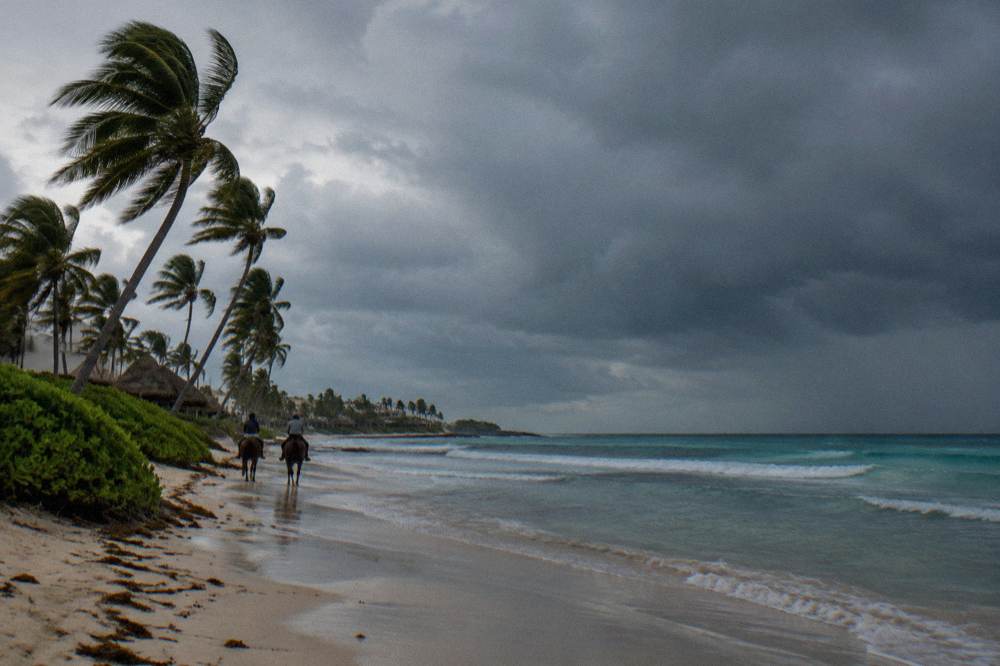
The practical error is treating rain as a lost day. Listings in the region state that tours operate rain or shine, that trails become muddy after rain, and that the mud is part of the experience rather than a defect. Cancellations are generally reserved for severe weather. If a wet week is forecast, read your tour's cancellation terms before booking, keep one flexible day in the itinerary, and let the rest ride. Our buggy tours in the rain and mud page covers exactly this scenario, and the Punta Cana hurricane season page puts the season in context.
For entry formalities, avoid two paperwork mistakes. Every passenger on a commercial flight must complete the free electronic E-Ticket form on the official portal eticket.migracion.gob.do, with separate QR codes for arrival and departure; it is free, can be filled in any time after flights are booked, and one family form covers up to seven people. Second, check passport validity against the official entry requirements before flying: the standard rule is six months of validity, though an exceptional measure in force through the end of 2026 lets tourists from the US, UK, Canada, the EU and several other countries enter with a passport valid only for the stay. Verify your own case on the official page rather than a forum thread.
What Should You Not Worry About In Punta Cana?
You do not need to worry about paying to walk on the sand, about hidden entry fees at the main public beaches, or about the E-Ticket costing money. Shoreline access is free by law, Macao and Bavaro carry no entry fee, and the E-Ticket is free on the official portal. Save your caution for the paid peripheries, not the beach itself.
A certain amount of anxiety floats around resort destinations, and most of it attaches to the wrong things. The beaches are public up to the high-tide strip under Dominican law. Macao Beach is free and fully public, and Bavaro's four access points cost nothing to use. The E-Ticket form is free, official, and takes minutes. The genuinely avoidable costs sit one layer out: the Cap Cana gate voucher for Juanillo, the ATM fees, the unmetered taxi, the optional photo package. Aim your caution there. For everything that costs nothing, our guide to Punta Cana's free beaches and low-cost sights covers where to go and how to decide whether a paid buggy or ATV day still belongs in a budget trip.
It also helps to keep the season in proportion. The National Hurricane Center maintains seasonal outlooks through the official season window. The better question is not whether to come between June and November but which activities flex with weather. Off-road tours are among the most weather-tolerant days you can book here: mud is expected, tours run in rain, and a morning departure typically beats the afternoon build-up, a trade-off our morning or afternoon buggy tour page settles in detail.
The last thing not to worry about is doing everything. Punta Cana rewards a simple plan: one beach day, one off-road day, one slow day. A small-group buggy outing such as the Ultimate Dune Buggies, ATVs and Polaris tour, 4.6 from 59 reviews and capped at four guests, covers countryside, a cave entrance at Taino Cave and mamajuana samples in one three-hour block from $55 per person. Pair it with free time at Macao or Bavaro and the trip has shape without a spreadsheet.
Common Questions About What To Stay Away From In Punta Cana
What To Stay Away From In Punta Cana?
Avoid unmetered taxi rides without an agreed fare, repeated small ATM withdrawals, paying local bills in dollars where pesos price lower, unvetted beach access routes, drinking tap water, and booking tours without reading the pickup, age and cancellation terms. Time your trip around the June-to-November hurricane season with flexible plans rather than avoidance.
Is The Water Safe To Drink In Punta Cana?
Standard travel advice for the Dominican Republic is that tap water is not recommended for drinking. Use bottled or filtered water, which is cheap and available everywhere, and be cautious with ice outside established resorts.
Do You Have To Pay To Use The Beaches In Punta Cana?
No. Dominican law keeps the shoreline public up to the 60-meter maritime-terrestrial strip from the high tide line. Macao Beach has zero entry fee, and Bavaro Beach's four public access points, Corales, El Cortecito, Jellyfish and Bibijagua, cost nothing to use.
Why Does Juanillo Beach Cost Money For Non-guests?
Non-guests entering Juanillo Beach through the Cap Cana main gate must buy a food and beverage voucher, with ID held at security, and ride-share drop-offs are not permitted at that gate. The fee attaches to the gate route, not the beach itself.
Do Buggy Tours Get Cancelled When It Rains?
Generally no. Listings in the region state tours operate rain or shine and that trails become muddy after rain, which operators describe as part of the experience. Cancellations are typically reserved for severe weather, and free cancellation windows are listed on the tours, so check the specific listing's terms.
Is The Dominican E-Ticket Free?
Yes. The electronic entry and exit form is free on the official portal, eticket.migracion.gob.do, and every passenger on a commercial flight must complete it, with separate QR codes for arrival and departure. One family form can cover up to seven people.