Punta Cana Weather By Month: Planning Outdoor Tours
Punta Cana stays warm all year, but rainfall swings hard between a December to April dry stretch and a wet late summer and autumn. That rhythm decides which months give the cleanest trails, which give the biggest puddles, and when a buggy or ATV day needs a backup plan.
Short answer
Punta Cana weather by month runs from about 53 mm of rain in March to about 142 mm in October, with daytime highs of 28 to 32 degrees Celsius year round. December through April is the drier stretch for buggy and ATV tours, while May and September through November are the wettest months. Atlantic hurricane season runs 1 June to 30 November.
The single biggest swing in Punta Cana weather is not temperature, because there barely is one. Long-term climate records show daytime highs sitting between 28 and 32 degrees Celsius in every month of the year, and sea temperatures never dropping below 26 degrees. What changes month to month is rain: March averages around 53 mm while October averages around 142 mm, nearly three times as much. For anyone planning an off-road day, that difference decides whether the trail is packed dirt or a splash zone.
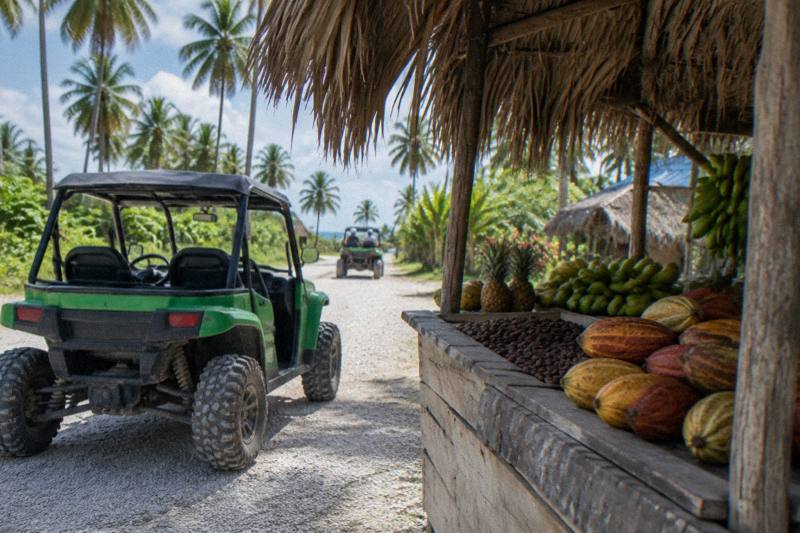
That matters because the buggy and ATV tours around Macao Beach and Bávaro run mostly outdoors, on jungle tracks, farmland roads and open beach stops. Operators such as Macao Off-Road Experience and Canelo Tours run four-hour circuits year round, and listings describe mud and standing water as part of the ride rather than a reason to stay home. The question is not whether tours run in the wet months, they do, it is which month matches the experience you actually want. A rider who books February expecting the same day as a friend who booked October will get two genuinely different tours, both of them legitimate, both of them fun for different reasons.
This guide walks through the weather month by month and connects each season to the listings that suit it, starting with the ATV Punta Cana tours themselves. Along the way it answers the practical questions that follow from the calendar: when trails dry out, when heat rather than rain becomes the planning problem, and how operators treat a rainy departure morning.
What Is The Weather Like In Punta Cana Month By Month?
Month by month, Punta Cana averages 28 to 32 degree Celsius daytime highs all year, with monthly rainfall ranging from a low near 53 mm in March to a high near 142 mm in October, and about 11 to 17 rainy days per month. The sea stays between 26 and 29 degrees. In short: always warm, sometimes wet, never cold.
Long-term averages compiled from climate datasets published by Weather2Travel's Punta Cana climate page give the cleanest picture of the year. The region has a hot tropical climate with a winter dry season, meaning the December to April stretch is noticeably drier than everything that follows. February and March are the quietest months for rain, at roughly 55 mm and 53 mm respectively. From May onward the totals climb, with May at about 131 mm, and the wettest stretch runs from August through November, peaking in October at about 142 mm.
| Month | Avg. rainfall | Avg. rainy days | Avg. daily high | Avg. sea temp |
|---|---|---|---|---|
| January | 67 mm | 16 | 28°C | 26°C |
| February | 55 mm | 12 | 28°C | 26°C |
| March | 53 mm | 12 | 29°C | 26°C |
| April | 73 mm | 11 | 30°C | 26°C |
| May | 131 mm | 13 | 30°C | 27°C |
| June | 112 mm | 14 | 31°C | 28°C |
| July | 92 mm | 16 | 32°C | 28°C |
| August | 101 mm | 16 | 32°C | 28°C |
| September | 109 mm | 15 | 32°C | 29°C |
| October | 142 mm | 16 | 31°C | 29°C |
| November | 119 mm | 16 | 30°C | 28°C |
| December | 89 mm | 17 | 29°C | 27°C |

Two details in that table surprise first-time visitors. First, the "dry" season is not bone dry: January still averages 16 rainy days, they are just shorter and lighter bursts. Second, December's rainfall average of 89 mm sits higher than many people assume for the holiday weeks, the real dry peak is February and March, not Christmas. Anyone booking a December buggy tour should expect a passing shower possibility rather than wall-to-wall sunshine.
Which Months Are The Driest For Buggy And ATV Tours?
February and March are the driest months for buggy and ATV tours in Punta Cana, averaging about 55 mm and 53 mm of rain and roughly 12 rainy days each, with highs near 28 to 29 degrees. January and April sit just behind them. These four months offer the most predictable trail conditions of the year.
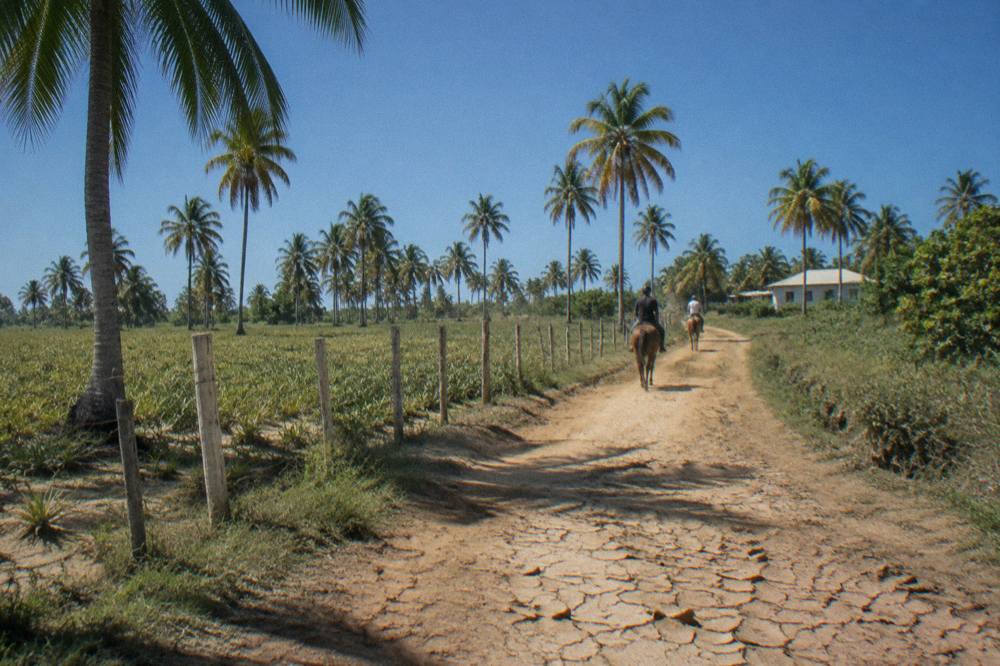
Drier months change the character of an off-road day. With less standing water, the farmland and jungle tracks around Macao Beach stay firmer, there is less splashing between riders in a convoy, and the open stretches are less about mud and more about speed and scenery. For travelers whose priority is photography at Macao Beach or a clean swim in a cenote such as Cueva La Posa, the February to April window is the safest calendar bet.
The tours that shine in these conditions include the four-hour Buggy or ATV Tour with Macao Beach, Cave and Tastings from GDP Excursions, rated 4.9 from 2,170 reviews and priced from $29 per person, which pairs the ride with a cave stop and coffee, cacao and mamajuana tastings. The Half-Day Adventure 4x4 ATV with Water Cave and Dominican Culture, rated 4.7 from 3,408 reviews and from $64.72 per person, runs the same format on quad bikes, with a crystal-clear water cave swim and a chocolate and coffee tasting stop. Both include round-trip transport from listed hotel zones and free cancellation, so a surprise shower rarely costs you the booking.
Dry-season booking has one trade-off: everyone else wants those months too. High season for Punta Cana tourism overlaps the dry stretch, so morning departure slots on popular tours fill first. Listings here typically run morning and early afternoon departures, and the early slots dodge the midday heat. If your dates are locked to February or March, book the off-road day early in your trip so a cancellation leaves time to rebook.
Speaking of rebooking, it helps to know how the calendar handles the biggest weather risk of all.
What Is Hurricane Season In Punta Cana?
The Atlantic hurricane season runs from 1 June to 30 November, according to the NOAA National Hurricane Center, and tropical cyclones can occasionally form outside those dates. For Punta Cana this means the wet months of September through November overlap the peak of the season, while December through May sits outside it.
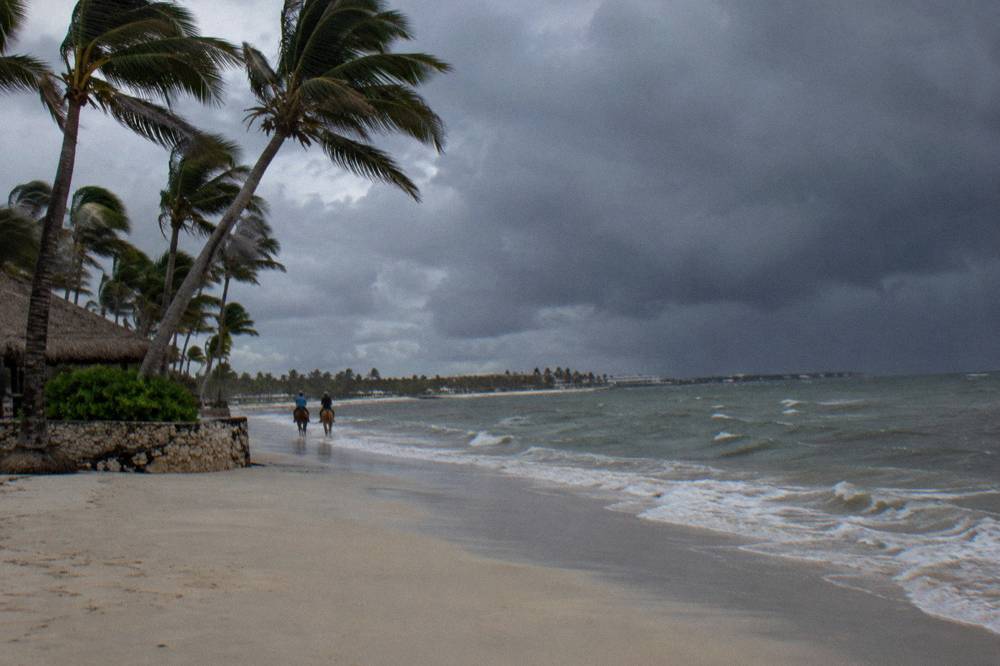
The NOAA National Hurricane Center climatology page defines the 1 June to 30 November season and notes that storms sometimes form beyond it. A direct hit on Punta Cana is not an annual event, and the more common summer and autumn disruption is rain: heavy showers, thunderstorms and gusty spells from tropical waves and troughs passing through the region. That is exactly the pattern behind the higher monthly rainfall averages from August through November in the table above.
How do operators handle it? The listings here state that tours generally run rain or shine, with cancellation reserved for severe weather, and every buggy and ATV product listed here carries a free-cancellation flag. The Family Wild Buggy Eco Adventure, rated 4.7 from 2,445 reviews and from $48.95 per person, includes round-trip transport, a coffee and chocolate tasting, and a Macao Beach stop, with free cancellation listed. The practical advice for a September to November trip is simple: build a spare day into the itinerary, book early in the stay rather than the last day, and keep the listing's cancellation terms in reach.
| Calendar stretch | Hurricane-season status | Typical booking approach |
|---|---|---|
| December to May | Outside the 1 June to 30 Nov season | Book freely, standard cancellation terms apply |
| June and July | Early season, historically quieter than autumn | Book early in your stay as routine |
| August and September | Inside the season, wetter monthly averages | Add a backup day to the itinerary |
| October and November | Season peak coincides with peak rainfall | Earliest slots, shortest tours, flexible dates |
For a deeper look at storm-season logistics, including how pickups and refunds tend to work when a departure morning turns wet, read the companion piece on Punta Cana hurricane season timing.
How Does Rain Change The Trails And The Tour Day?
Rain changes the trails rather than closing them: listings state tours operate rain or shine, with muddy tracks described as a normal part of the ride and cancellation reserved for severe weather. Expect deeper puddles, slower convoy sections and a real chance of getting dirty in the wetter months of May and August through November.
Multiple operator listings updated through October 2026 say the same thing in different words: trails become muddy after rain, riders describe it as part of the fun, and buggies may pause briefly in deep mud or water before continuing. The Buggy Expedition and Blue Cenote Swim from Punta Cana, from $24 per person and rated 4.2 from 125 reviews, runs five to six and a half hours of exactly this terrain, with a ranch visit and Dominican coffee tasting between the muddy sections.
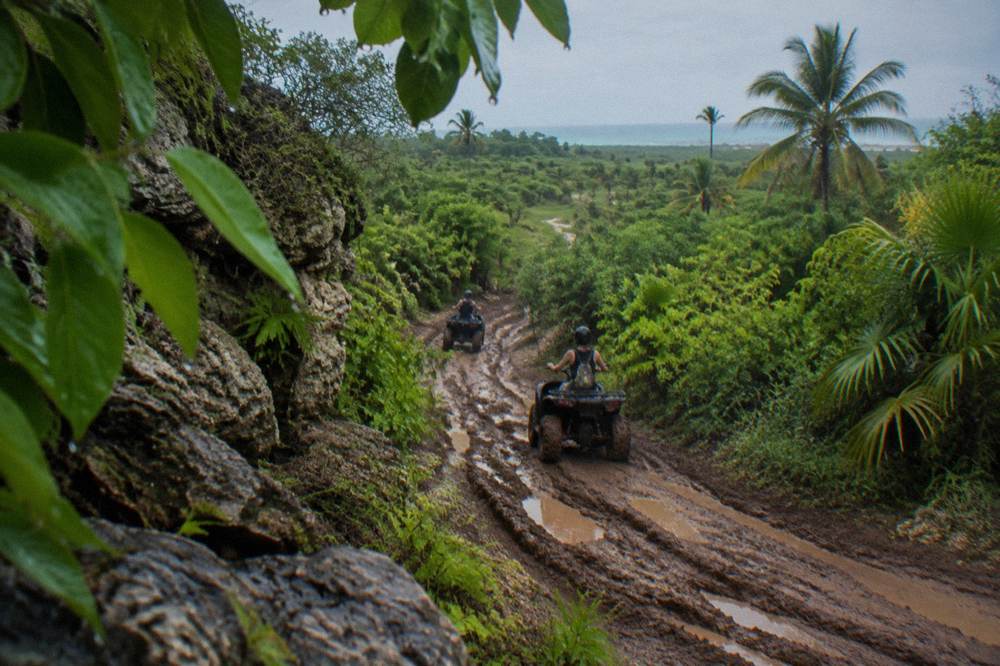
Gear advice follows the weather. Many operators list helmets and a safety briefing, and several operators require closed-toe shoes. In the wet months, clothes you do not mind ruining beat anything fashionable, and several listings sell or suggest bandanas and protective glasses as extras precisely because dust and splash alternate on the same route. The full clothing logic, including what to wear for a cenote swim, is laid out in the guide on what to wear on a buggy tour.
One operator-specific note on rainy-day bookings: heat plus rain plus a 4-hour shared convoy is a different day from the same route in February. Riders who want the mud but not the maximum humidity sometimes pick shorter products in the wet season, such as the two-hour Macao Cenote and Beach Tour by 300cc Spider Buggy, from $44 per person, which uses an automatic two-seater and includes ranch tastings. Riders who want the full splash experience go the other way and book the longest circuit available that week.
When Is It Too Hot For An ATV Tour In Punta Cana?
No Punta Cana month is too hot for an ATV tour on paper, but July through September average 32 degree highs with 28 to 29 degree seas, so the practical answer is timing: book the earliest departure slot, choose tours with swim stops, and treat midday rides as the backup rather than the plan.
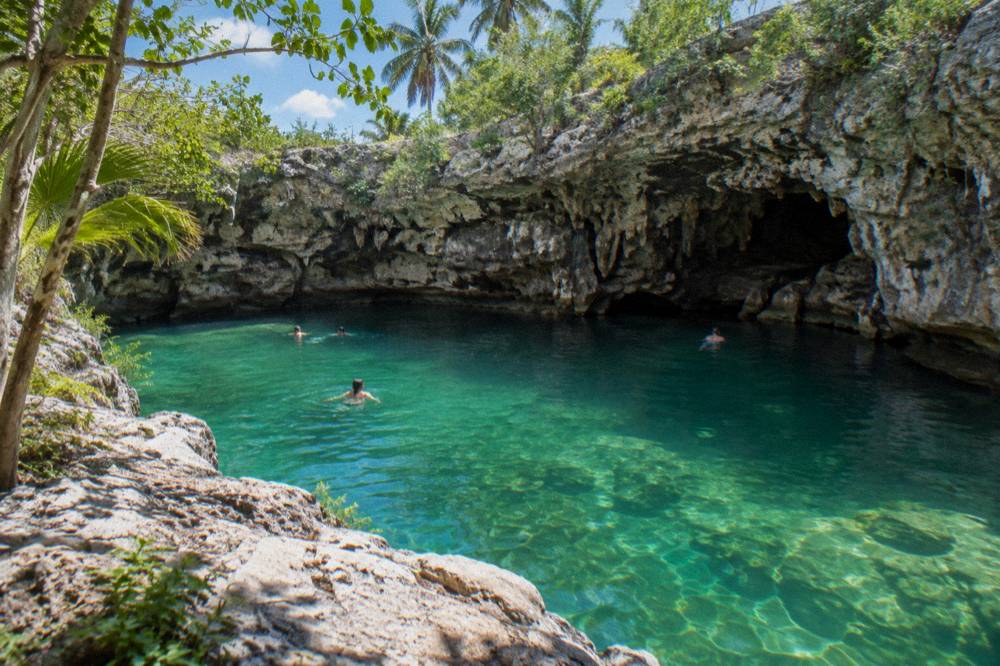
The heat peak and the rain peak do not line up neatly. July and August average 32 degree highs but only 92 mm and 101 mm of rain, while October is a degree cooler but the wettest month at 142 mm. That makes July and August the months where heat management, not rainfall, shapes the day. Convoy riding in a helmet under full tropical sun is genuinely warm work, and the listings that build in a water cave swim or a Macao Beach stop effectively include a built-in cooldown.
The tours best built for hot months are the ones with water stops. The ATV Adventure to Water Cave and Macao Beach, rated 4.8 from 3,498 reviews and from $45 per person, is the most reviewed listing here and includes a natural cave and cenote visit plus the Macao Beach stop. The Small Group 4x4 ATV Punta Cana jungle tour from 365FlaminGO, a perfect 5.0 from 70 reviews and from $67.99 per person, runs five hours with wild beach and palm grove swims, non-alcoholic drinks included, and hotel pickup, though with a small pool of reviews compared with the big shared tours. Both formats front-load the riding before the midday heat peaks.
Morning-versus-afternoon is its own decision, and it interacts with the monthly calendar: in the dry season the afternoon slots are comfortable, in the hotter months the morning slots are the ones worth fighting for. The full comparison, including how pickup windows work, sits in the guide on choosing a morning or afternoon buggy tour.
Which Month Should You Book A Buggy Or ATV Tour In Punta Cana?
For the driest trails and mildest heat, book a buggy or ATV tour for February or March, when rainfall averages about 55 mm and 53 mm and highs sit near 28 to 29 degrees. For thinner crowds and easier availability, May, June, October and November work if you accept a wetter, muddier ride. Book the first days of your stay in wet months.
There is no bad month, only different trades. The table below matches each stretch of the year to what it means for an off-road booking, using the tours listed here as the examples.
| Season | Months | Typical conditions | Best-fit listings here |
|---|---|---|---|
| Dry peak | February, March | About 53 to 55 mm rain, 12 rainy days, 28 to 29°C highs | Any 4-hour shared tour; photography-heavy riders |
| Shoulder dry | January, April | 67 to 73 mm rain, 11 to 16 rainy days | Cave swim plus beach combos |
| Early wet | May, June | 112 to 131 mm rain, warmer seas | Tours with cenote swims for midday cooling |
| Hot mid-summer | July, August | 32°C highs, 92 to 101 mm rain | Morning departures, water-cave formats |
| Peak wet | September to November | 109 to 142 mm rain, hurricane season until 30 Nov | Shorter tours, backup day in the itinerary |
| Holiday | December | 89 mm rain, 17 rainy days, 29°C | Book early; high-season demand for slots |

Budget is the quiet winner in the wetter months. The lowest entry points, such as the Off Road Adventure in Buggy and Cave from CRJ Buggy Express, rated 4.9 from 38 reviews and from $23 per person, and the Buggy Ride to Macao Beach and Natural Cave from Caribbean Medley Tours, from $22.40 per person, sit well inside almost any vacation budget, and the off-peak calendar makes slots easier to grab a day or two ahead. At the other end, the full-day combos at Bavaro Adventure Park, from $99 to $169 per person with lunch included, make most sense in the months when a whole outdoor day is a comfortable prospect rather than an endurance event.
One more planning detail that the monthly averages hide: the rainy-day counts are similar almost everywhere on the calendar, between 11 and 17 days per month, but the intensity differs sharply. A dry-season rainy day is often a single brief shower that leaves the trail damp; a wet-season rainy day can deliver sustained downpours that keep the puddles deep for days. That is why the same listing feels like two different products depending on the month, and why reading a recent review or two on the live listing before booking an off-peak date tells you more than the rainfall average alone.
Whichever month you land on, the booking mechanics are the same: every listing here shows free cancellation, pickup details are stated on each product's listing, and the weather question you actually control is the departure time, not the forecast. Choose the month for the trails you want, the slot for the heat you can handle, and let the rain do the rest.
Common Questions About Punta Cana Weather By Month
What Is The Rainiest Month In Punta Cana?
October, averaging about 142 mm of rain across roughly 16 rainy days. May follows at about 131 mm and November at about 119 mm over roughly 16 rainy days. Even so, tours run rain or shine in these months, with cancellation reserved for severe weather.
What Is The Driest Month In Punta Cana?
March, averaging about 53 mm of rain over roughly 12 rainy days, with February close behind at about 55 mm. These two months, plus January and April, form the drier stretch that suits buggy and ATV tours best.
Is Punta Cana Hot All Year?
Yes. Long-term averages show daytime highs between 28 and 32 degrees Celsius in every month, and sea temperatures between 26 and 29 degrees. The heat peaks in July through September at 32 degree averages.
Do Buggy Tours Get Cancelled When It Rains In Punta Cana?
Rarely for ordinary rain. Operator listings state tours operate rain or shine, muddy trails are described as part of the ride, and cancellation is reserved for severe weather. Every listing here shows free cancellation, so check the terms when you book.
When Is Hurricane Season In Punta Cana?
The Atlantic hurricane season runs from 1 June to 30 November, per the NOAA National Hurricane Center, and storms can occasionally form outside those dates. The wet months of September through November overlap the season's peak.
Which Month Is Best For An ATV Tour In Punta Cana?
February or March for the driest trails, or July and August if heat does not bother you and you book a morning slot with a water cave stop. Off-peak months like May, June and November offer the same tours with easier availability and muddier conditions.